
AI-Generated Product Images: How They Can Hurt E-commerce Sales

AI-generated product images can help online businesses create professional visuals faster and at a lower cost. But there's a risk: when a product looks different in an image from what customers receive, the business may lose more than a sale. It can also lose customer trust.
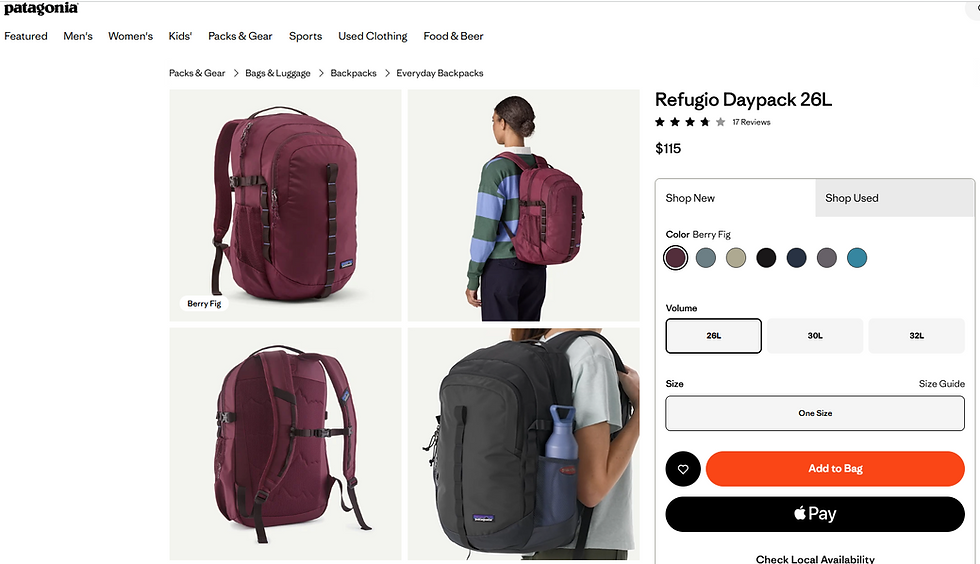
Research from the Baymard Institute highlights why product visuals matter. In its usability research, 56% of test participants first explored product images when they landed on a product page, before reading the title or scrolling further.
Baymard
This shows that images aren't just decoration. They help shoppers decide whether a product is worth buying.
So, can AI imagery improve your sales without damaging customer confidence? The answer depends on how you use it.
1. The Trust Gap: When Attractive Images Lose Sales
Customers can't touch a product before buying online. They depend on photographs to judge its colour, size, material, quality, and appearance.
When AI changes these details, customers may question whether the listing shows the real product. That uncertainty can lead them to leave the page or look for a more trustworthy seller.
Baymard's research supports the importance of authentic visual information. Its usability studies found that customers often use photos submitted by other buyers to verify product details that polished brand images may not fully communicate.
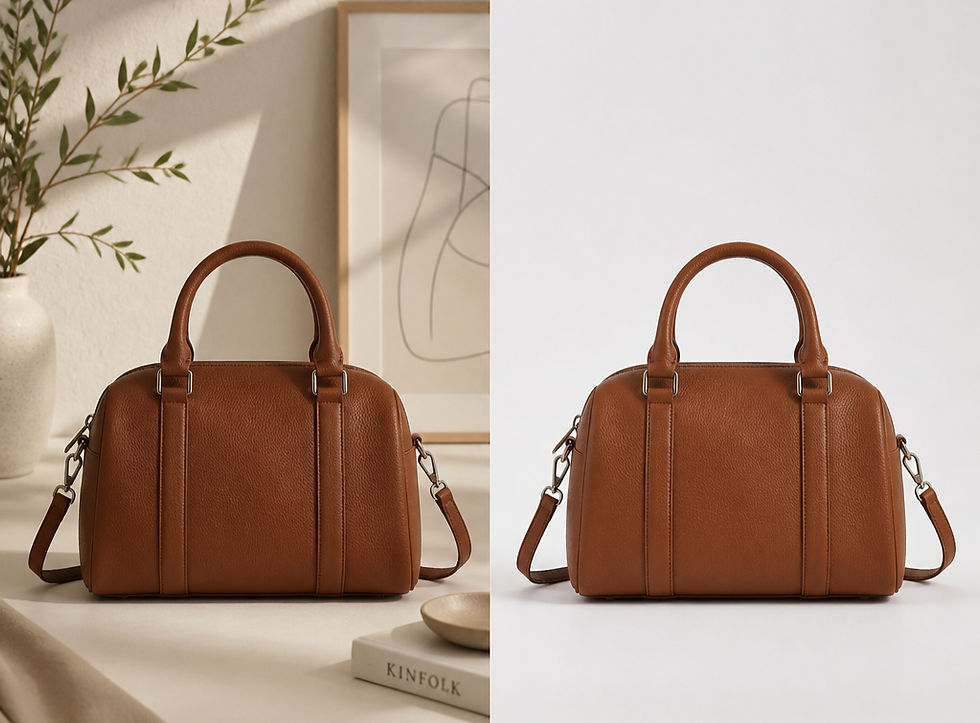
For example, an AI-enhanced handbag image might show a smooth leather texture and a warm brown finish. If the actual bag looks grainier and more orange, the customer may feel misled.
The lesson: An image should attract attention while setting realistic expectations. A beautiful image that creates doubt can be less valuable than a simple, accurate photograph.
2. Returns, Complaints, and Negative Reviews
Misleading images can create a costly gap between what customers expect and what they receive.
Common problems include:
Colour: A product appears lighter or darker than it really is.
Size: AI staging makes furniture or accessories look larger than they are.
Texture: Fabric, wood, or leather looks different from the actual material.
Fit: AI-generated models misrepresent how clothing fits or hangs.
Features: Images show accessories or product details that aren't included.
These differences may lead to returns, refunds, poor reviews, and additional customer service costs.
Baymard's research also found that 56% of participants initially explored product images, while its research on product scale found that 42% of users attempted to judge a product's size from its images.
This reinforces why accurate product proportions and useful visual context matter.
However, these figures measure shopping behaviour, not the direct impact of AI-generated imagery on return rates. Businesses should measure that impact using their own sales and returns data.
3. Marketplace Rules: Can AI Images Get Your Listing Removed?
AI-generated images aren't automatically prohibited everywhere. The rules depend on the marketplace, product category, and image type.
Amazon's official Product Image Guide requires the main image to represent the real product accurately, including its scale, quantity, and colour. Amazon also warns that non-compliant images may be removed and listings may be temporarily removed from search if no compliant main image is available.
Amazon Seller Central
Etsy's Creativity Standards also specifies original photo or video requirements for items made by sellers and requires disclosure for seller-prompted AI creations in relevant listings.
Before uploading images, review the current rules for your marketplace. Don't assume that a visually impressive AI image automatically meets its requirements.
4. Best Practices: Use AI Without Misrepresenting Products
The safest approach is to start with a photograph of the actual product and use AI to improve its presentation.
Keep the product real: Preserve its actual colour, shape, dimensions, materials, and features.
Improve the background: Use AI to create suitable lifestyle settings without altering the item.
Show multiple angles: Include close-ups, side views, packaging, and size references.
Include real customer photos: Where possible, feature genuine buyer images and reviews to help shoppers verify what the product looks like in everyday use.
Check every image: Compare the final version against the original photograph before publishing.
Baymard's research recommends real-world customer imagery because it helps shoppers assess products beyond carefully controlled marketing photos.
5. A/B Test Your Images to Protect Sales
Don't assume AI imagery will always improve or damage conversions. Test it.
Compare an authentic product photograph against an AI-assisted lifestyle image while keeping the price, offer, audience, and other conditions consistent.
Track:
Click-through and add-to-cart rates.
Completed purchases and conversion rates.
Returns and refund reasons.
Negative reviews and product-related complaints.
Profit after fulfilment and return costs.
An image that earns more clicks but leads to fewer purchases or more returns may not be the better choice. Run tests long enough to gather meaningful data, and compare results across relevant product categories.
AI can help e-commerce businesses create attractive product visuals faster, but product accuracy must come first. Misleading images can weaken trust, create unrealistic expectations, and expose sellers to avoidable returns and marketplace compliance problems.
Start with authentic product photography, use AI for controlled enhancements, and test results against real business outcomes. Use AI to improve how your product is presented—not to change what customers believe they're buying.
FAQs
1. Can AI-generated product images reduce sales?
Yes, if they misrepresent the product or make customers doubt the listing's accuracy. The impact varies by product and audience, so test performance rather than assuming a universal effect.
2. Are AI product images allowed on Amazon and Etsy?
Some AI-assisted images may be permitted, but platform rules differ. Amazon requires accurate product representation, while Etsy has specific requirements for original imagery and disclosure of seller-prompted AI creations. Check current policies before publishing.
3. Can AI product photos increase returns?
They can contribute to returns if they misrepresent colour, size, texture, fit, or included features. Track return reasons to determine whether your images are contributing to the problem.
4. What's the safest way to use AI for product photography?
Use a real product photograph as your starting point. Apply AI to backgrounds or lifestyle scenes while preserving the product's actual appearance, and review the final image for accuracy.
5. How do I know whether AI images are working?
Run controlled A/B tests and compare conversion rates, returns, complaints, and profit—not just clicks. This helps you identify which visuals attract customers who are more likely to complete and keep their purchases.


Comments